TL;DR
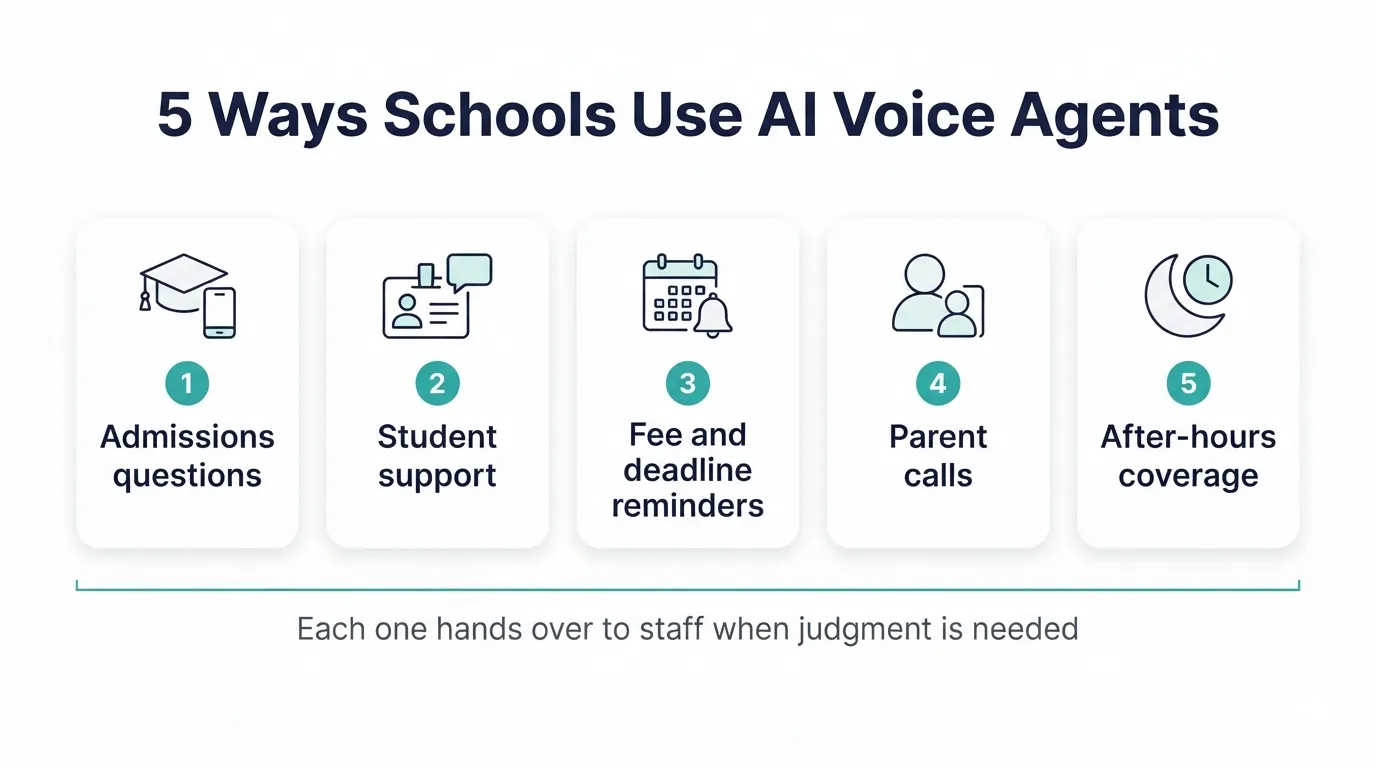
- AI voice agents in education handle five kinds of calls well: admissions questions, common student support questions, fee and deadline reminders, parent calls in schools, and after-hours or peak-season overflow.
- Schools and universities use them differently. Schools mostly talk to parents. Universities mostly talk to applicants and students.
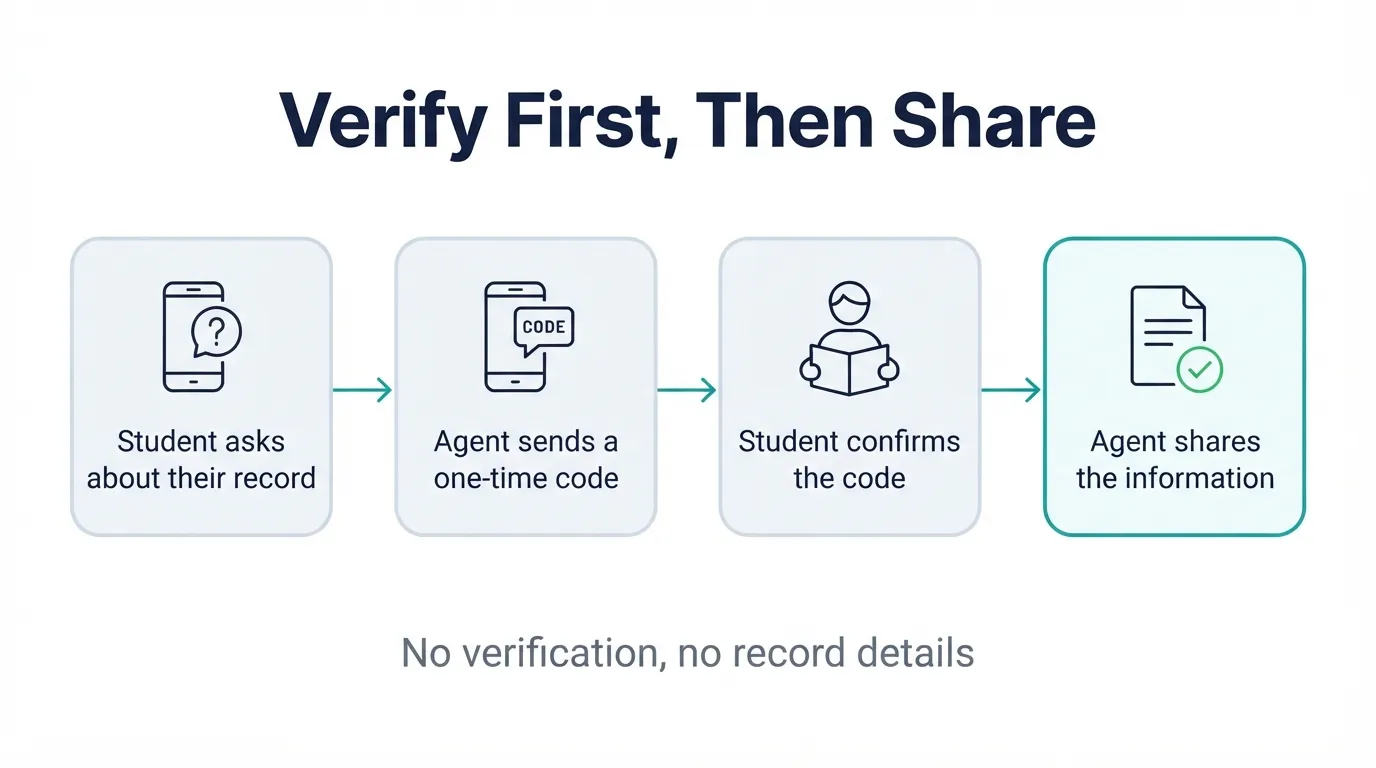
- Before an agent shares anything from a student's record, it has to confirm who's calling. Under FERPA, that isn't optional.
- Start with admissions or common questions, where call volume is high and the risk is low.
It's the week admission decisions go out. The admissions line rings all day, parents wait on hold for half an hour, and the applicant who just wanted to know when the deposit is due gives up and calls the next university on their list.
AI voice agents in education pick up those calls. They answer every call, handle the questions that come up hundreds of times, and pass anything that needs judgment to a person on your team. Below are five ways schools and universities use them, with an example call for each, where they help, where they should stop, and the privacy rules that matter before you switch one on.
The example calls below are illustrative, not records of real calls. Haass is an ElevenLabs implementation partner.
5 Ways Schools Use AI Voice Agents in Education
The five uses below are ordered roughly by how often institutions start with them. Each one notes whether it fits schools, universities or both.
1. Admissions Inquiries and Application Follow-Up
Fits: universities and schools.
What it does. The agent answers prospective students and parents who call about programs, entry requirements, deadlines, campus visits and fees. It can also call back people who filled in an enquiry form, answer their questions and book a campus visit or a call with an admissions officer.
Example call.
Caller: Hi, I'm applying for the nursing program. When's the deadline for the January intake?
Agent: The application deadline for the January nursing intake is listed on our admissions page as November 30th. Would you like me to text you the link, or book a call with an admissions officer?
Caller: A call would be great.
Agent: I have Tuesday at 10am or Wednesday at 3pm. Which suits you?
Why it helps. A quick answer gives applicants less reason to move on to the next institution on their list. Your admissions officers spend their time on applicants who need a real conversation, rather than reading out deadlines.
Where it stops. The agent should only answer from your published admissions information. Questions about a specific application's outcome, scholarships decided case by case, or exceptions to entry requirements go to a person.
Connects to. Your admissions CRM, your course and deadline information, and the admissions team's calendar.
2. Automated Student Support for Common Questions
Fits: mostly universities.
What it does. The agent handles the questions that fill up registrar, financial aid and IT help lines: when term starts, how to get a transcript, where to find the timetable, how to reset a password, and what documents financial aid needs. These AI assistants for universities can also look up a student's own information, such as a balance or an application status, once the caller is verified.
Example call.
Caller: I need to check whether my financial aid has been processed.
Agent: I can help with that. First, I need to confirm it's you. I've sent a one-time code to the phone number on your student record. Can you read it back to me?
Caller: It's 4-8-2-9-1-6.
Agent: Thanks, that's confirmed. Your financial aid application has been received and is being reviewed. Would you like to be connected to the financial aid office for more detail?
Why it helps. Higher education voice bots take the repetitive questions off your service desks, especially at the start of term, and students get answers at night and on weekends, when many of them are dealing with this.
Where it stops. Nothing from a student's record should be shared until the caller is verified. Appeals, academic standing, disciplinary matters and complex financial aid cases go to staff.
Connects to. Your student information system (SIS), your knowledge base, and your identity verification method, such as one-time codes sent to the number on file.
3. Fee, Deadline and Enrollment Reminders
Fits: universities and schools.
What it does. The agent calls students or parents who have agreed to receive calls, to remind them about fee deadlines, missing enrollment documents or registration windows. It answers basic questions and offers to send a payment link by text.
Example call.
Agent: Hi, this is the AI assistant from Westbrook College, calling about your fall registration. Your registration closes this Friday, and your enrollment form is still missing. Would you like me to text you the link to complete it?
Caller: Yes, please.
Agent: Done. If you have questions about the form, the registrar's office is open until 5pm today.
Why it helps. Reminders reach everyone on time without staff making hundreds of calls, and fewer students miss deadlines because nobody followed up.
Where it stops. Outbound calls need the right consent, and the agent should say at the start that it's an AI. Payment disputes, hardship requests and anything involving a student's financial situation go to a person. Keep card payments out of the call by sending a secure link instead.
Connects to. Your SIS or enrollment system for deadlines and missing items, your consent records, and your payment system for secure links.
4. Parent Calls in K-12 Schools
Fits: schools.
What it does. Conversational AI for schools handles calls with parents: attendance notifications when a student is absent, reminders about events, closures or forms, and answers to common questions about transport, lunch menus or term dates. It can answer parents in their own language.
Example call.
Agent: Hello, this is the AI assistant from Riverside Middle School. Your child wasn't marked present in first period today. Can you tell me if they're absent?
Caller: Yes, they're sick and staying home.
Agent: Thank you. I've recorded the absence as illness. If they're still unwell tomorrow, you can call this number again or tell their teacher.
Why it helps. Front-office staff spend less of the morning making absence calls, and parents who speak a different language at home can get answers without waiting for an interpreter.
Where it stops. Anything involving a child's safety, wellbeing, behavior or a safeguarding concern goes straight to a person. The agent shouldn't discuss a student with anyone who isn't on the approved contact list.
Connects to. Your SIS for attendance and approved contacts, and your school calendar and announcements.
5. After-Hours and Peak-Season Coverage
Fits: universities and schools.
What it does. The agent answers when your offices are closed or every line is busy: admission results day, the first week of term, a snow day closure, or international students calling from a different time zone. It answers what it can and books a callback for everything else.
Example call.
Caller: I'm calling from Singapore. My visa letter hasn't arrived and term starts in two weeks.
Agent: I'm sorry about the worry. The international office is closed right now, but I can book a callback for 9am tomorrow their time, which is 9pm for you. Would that work?
Why it helps. Campus AI solutions like this keep peaks from turning into hours of hold time, and international students don't have to call in the middle of their night. A voice agent can also help students who find it easier to speak than to read a website or type a form.
Where it stops. Booked callbacks only work if someone makes them on time. Urgent issues, such as a student in difficulty abroad, need a clear route to a person even outside office hours.
Connects to. Your knowledge base, staff calendars for callbacks, and an out-of-hours escalation contact.
Schools vs Universities: Where Voice Agents Fit
| K-12 schools | Universities | |
|---|---|---|
| Who calls | Mostly parents and guardians | Mostly applicants and students, sometimes parents |
| Most common calls | Attendance, events, closures, transport, fees | Admissions, financial aid, registrar, IT, fees |
| Key systems | SIS, school calendar | Admissions CRM, SIS, knowledge base |
| Main privacy rules (US) | FERPA, and COPPA for online services collecting data from children under 13 | FERPA |
| Best first use | Parent calls about attendance and events | Admissions questions or common student questions |
Calls to Keep With People
Some calls shouldn't go to a voice agent, however good it sounds. Route these to trained staff from the first word:
- Counseling, mental health or crisis calls
- Safeguarding and child protection concerns
- Disciplinary matters and academic appeals
- Complex or disputed financial aid cases
- Complaints, especially about staff or safety
An agent can recognize these calls and transfer them quickly. It shouldn't try to handle them.
Privacy and Compliance for Campus AI Solutions
This section is general information, not legal advice. Review your setup with your legal and data protection teams before launch.
FERPA. The Family Educational Rights and Privacy Act protects the privacy of student education records in the US. Before an agent shares anything from a record, such as a balance, grade or application status, it needs to verify that the caller is the student or someone authorized to receive it. One-time codes sent to the contact details on file are a common approach.
COPPA. The FTC's Children's Online Privacy Protection Rule applies to online services directed at children under 13, or that knowingly collect personal information from them. If a voice service interacts with young students directly, check whether it applies.
Outbound consent. In the US, the FCC's February 2024 Declaratory Ruling confirmed that AI-generated voices count as artificial voices under the Telephone Consumer Protection Act, so reminder calls need prior consent.
AI disclosure. Tell callers at the start that they're speaking with an AI assistant. In the EU, Article 50 of the AI Act requires it. Institutions in India also need to consider the Digital Personal Data Protection Act, 2023, for student data.
How to Choose Your First Use Case
Pick one use case with high call volume and low risk, and run a pilot before adding more. For most universities, that's admissions questions or common student support questions that don't need a record lookup. For most schools, it's parent calls about attendance and events.
Avoid starting with anything that shares record information until your verification process is tested. Add those calls once the basics work.
For a wider view of which calls to automate first, see our guide to AI voice agent use cases for customer support, and for the rules on reminder calls, our guide to AI outbound calling.
Building Education Voice Agents on ElevenLabs
All five uses can run on ElevenAgents, ElevenLabs' platform for building voice agents. For schools and universities, the parts that matter most are:
- Natural voices in many languages. ElevenLabs' latest models cover more than 90 languages, which helps with international students and multilingual families. Our guide on making an ElevenLabs agent sound natural covers how to tune them.
- Workflows for verification. Identity checks run in a fixed order before any record information is shared.
- Tools that connect to your systems, such as your SIS, admissions CRM and calendars.
- Phone connections through Twilio or SIP trunking, so you keep your existing numbers.
- Transfers to staff with a summary, so callers don't repeat themselves.
- Batch outbound calling for consented reminders.
For more on the platform, see what ElevenLabs is. For how a rollout runs from pilot to production, see our guide to ElevenAgents implementation. If voice AI is new to your institution, our piece on why voice is becoming the main interface for support explains the bigger picture.
Frequently Asked Questions
How are AI voice agents used in education?
AI voice agents in education answer admissions questions, handle common student support calls about deadlines, transcripts and passwords, send fee and enrollment reminders, call parents about attendance and events, and cover after-hours and peak-season calls. They handle repetitive questions and hand anything that needs judgment, such as appeals or wellbeing concerns, to staff.
Are AI voice agents FERPA compliant?
An AI voice agent can be used in a FERPA-compliant way if it's set up correctly. The key step is verifying the caller before sharing anything from a student's education record, for example with a one-time code sent to the contact details on file. Your institution remains responsible for compliance, so review the setup with your privacy team.
Can an AI voice agent call parents or students?
Yes, if they've agreed to receive calls. AI voice agents can call parents about absences, events and forms, and call students about deadlines and missing documents. In the US, AI-generated voice calls fall under the Telephone Consumer Protection Act, so you need prior consent, and the agent should say it's an AI at the start of the call.
Will AI voice agents replace admissions or student services staff?
No. AI voice agents take the repetitive calls, such as deadlines, office hours and basic status checks, so admissions and student services staff can spend more time on applicants and students who need a real conversation. Appeals, complex financial aid cases and wellbeing concerns still need people.
What should schools never use a voice agent for?
Schools and universities shouldn't use voice agents for counseling, mental health or crisis calls, safeguarding concerns, disciplinary matters or academic appeals. An agent can recognize these calls and transfer them to trained staff straight away, but the conversation itself should always be handled by a person.
Next Step: Start With One Call Type
AI voice agents in education work best when they start small. Pick the calls your admissions or student services team answers most often, test an agent on those during a quieter period, and expand once verification and handovers work well.
Haass builds ElevenLabs voice agents for schools and universities, from call design and SIS connections to verification and handover rules. Tell us which calls your team handles most, and we'll show you how an ElevenLabs agent would handle them. Talk to our team, or read our guide to choosing an ElevenLabs implementation partner.