TL;DR
- If you want to listen to PDFs, articles, and books, Speechify Reader is the more established app. ElevenLabs has its own reader, ElevenReader, which is cheaper ($11 a month vs. $29) but doesn't export audio.
- If you want to produce audio (voiceovers, audiobooks, dubbing, a cloned brand voice), ElevenLabs is the stronger platform.
- For developers, raw latency is now close on both APIs. Speechify's API is much cheaper per character; ElevenLabs ranks higher in independent blind listening tests.
- If you need a voice agent that answers phone calls, only ElevenLabs ships a ready-made agents platform.
You priced Speechify at $29 a month and ElevenLabs at $22 a month, and now you're stuck, because you aren't sure the two products even do the same job. That's a fair worry. Most ElevenLabs vs Speechify articles put a reading app next to a voice production platform and crown a winner, which tells you nothing about your own use case.
This guide splits the comparison by job: what each product does, what you'll pay at real volumes, how voice cloning differs, and which API to build on. We implement ElevenLabs for businesses at Haass, so we have a bias. We'll say where it might show, and we'll point you to the vendor pages so you can check every number yourself. If you're new to the platform, start with our primer on what ElevenLabs is and what it includes.
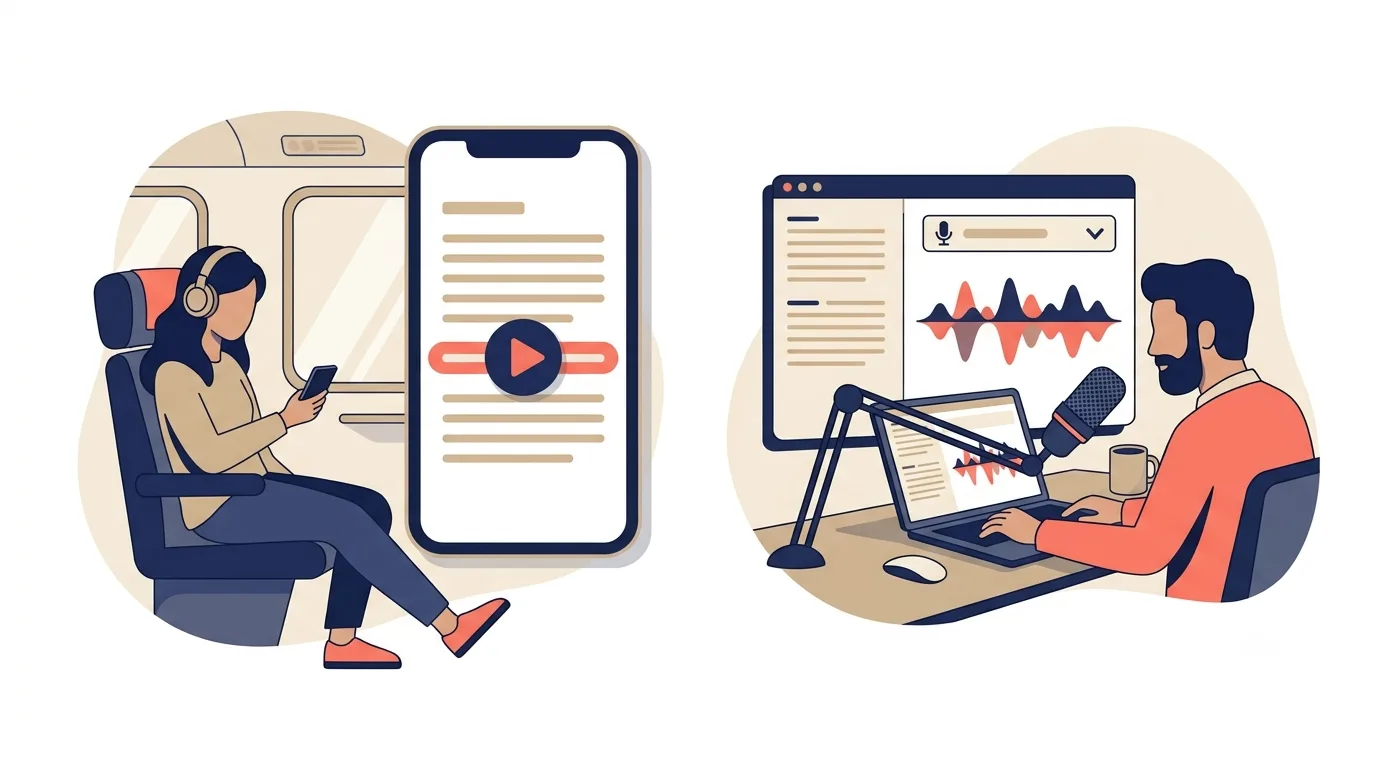
ElevenLabs vs Speechify at a glance
We checked every figure below against the vendors' own pricing pages on November 12, 2026. Pricing in this category changes every few months (both companies were running launch promotions that week), so confirm on the ElevenLabs pricing page and SpeechifyAI pricing before you commit.
| ElevenLabs | Speechify | |
|---|---|---|
| Built mainly for | Producing audio: voiceovers, dubbing, apps, agents | Listening to text: reading, studying, accessibility |
| Personal reading app | ElevenReader, $11/month (no audio export) | Speechify Reader, $29/month |
| Flagship API model | Eleven v4: 90+ languages, $0.08 per 1,000 characters | Simba 3.5: 48 languages, $10–$15 per 1M characters on Starter |
| Fastest API option | Flash: ~75ms; v4 Turbo: ~100ms | Simba 3.5: 72ms to first audio (p95, Speechify's own figure) |
| Voice cloning | Instant from Starter ($6), professional from Creator ($22) | On paid API plans, from $10/month |
| Dubbing | Dubbing v2 in 92 languages | Speechify Studio, about 20 languages |
| Voice agents | Yes, ElevenAgents | No equivalent |
| Best fit | Creators, developers, support teams | Students, heavy readers, cost-sensitive batch narration |
First, what are you actually comparing?
Most confusion in this comparison comes from pricing one Speechify product against a different ElevenLabs product. Both companies sell several things, and they bill each one separately.
Speechify's three products: Reader, Studio, and the API
Speechify Reader is the app most people know. You load a PDF, a web page, or a photo of a printed page, and it reads the text aloud with highlighting and speed controls, across iOS, Android, Mac, Windows, and a Chrome extension. Premium costs $29 a month or $139 a year and includes 1,000+ voices, 60+ languages, and 5x playback speed. The free plan caps you at 1.5x speed and 10 basic voices. Speechify reports 50M+ users and won a 2025 Apple Design Award, and the app shows that polish.
Speechify Studio is a separate subscription for making voiceovers, dubbing, and AI avatar videos. It runs on its own credits. A Reader plan gives you no Studio allowance, and vice versa.
The SpeechifyAI API is the developer product, built on Speechify's own Simba models. It's billed per character and has nothing to do with the $29 Reader price you may have seen first.
ElevenLabs: creative tools, ElevenReader, the API, and Agents
ElevenLabs started as a production platform and still is one. The web app covers text-to-speech, voice cloning, a voice changer, sound effects, and a Dubbing Studio, all drawing from one credit balance per plan. The developer API (ElevenAPI) exposes the same models.
What many comparison articles miss is that ElevenLabs also has a consumer reading app. ElevenReader reads PDFs, EPUBs, DOCX files, articles, and pasted text aloud in 1,000+ voices across 90+ languages, at up to 4x speed. The free plan covers 10 hours of text-to-audio a month, and Ultra costs $11 a month or $99 a year. Its FAQ says it doesn't export audio, so it's a listening tool. For downloadable audio you'd use the main ElevenLabs platform.
The fourth product, ElevenLabs Agents, builds voice agents that hold real conversations over the phone or the web. Speechify has nothing comparable, which matters a lot if you're a business rather than a reader.
So the fair matchups are Speechify Reader vs ElevenReader for listening, Speechify Studio vs the ElevenLabs creative tools for production, and SpeechifyAI vs ElevenAPI for developers.
Voice quality and expressiveness
For short clips, both tools produce audio you could publish. The gap shows up in two places: emotional range and long-form consistency, and each tool leads on one of them.
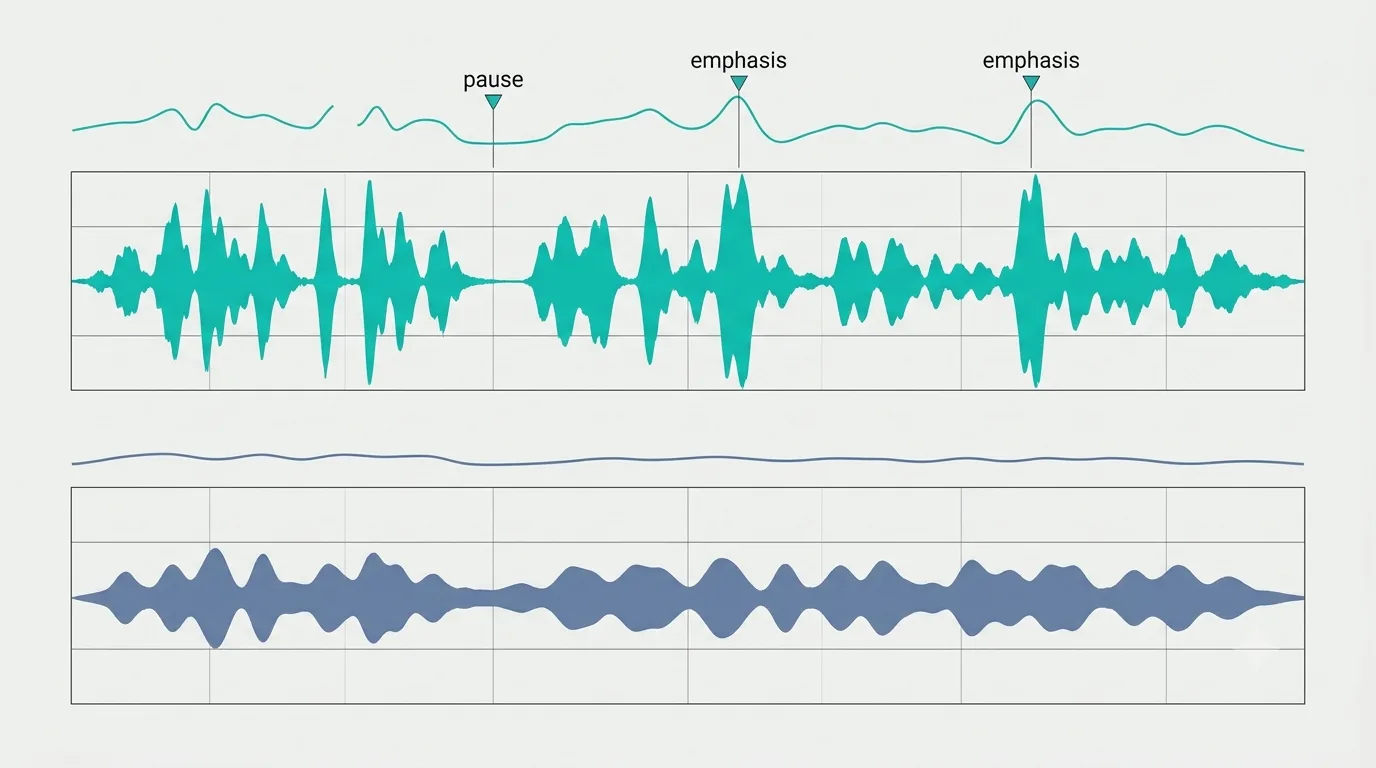
ElevenLabs is better at sounding like a person who means what they're saying. Its expressive models handle laughter, hesitation, and shifts in tone, and you can steer delivery with stability, similarity, and style settings or with audio tags in the script. That's why YouTube narrators, game studios, and audiobook producers tend to pick it. Our guide to ElevenLabs v4 vs v3 vs Flash covers which model to use when.
Speechify tunes its Simba models for steady delivery across hours of listening, including at high playback speeds, which is what you want when you're getting through a 60-page report on a commute. Speechify also claims Simba beats ElevenLabs on emotional control. That's Speechify's own benchmark. The independent Artificial Analysis Speech Arena, a blind listening test, tells a different story: on the board dated October 13, 2026, Eleven v4 Turbo (Elo 1,330) and Eleven v4 (1,326) ranked first and second of 96 models, while Speechify's Simba 3.2 placed ninth (1,244). Simba 3.2 was also the cheapest model in that top ten. Simba 3.5 launched after that date, so check the live board before you decide.
In practice, ElevenLabs output sounds more performed and Speechify output sounds more even. Neither is wrong; they're tuned for different listeners. If your voices still come out flat, the cause is usually the script or the settings rather than the model. We wrote up the common fixes in why AI voices sound robotic.
ElevenLabs vs Speechify voice cloning
ElevenLabs gives you more cloning options and higher fidelity; Speechify gives you a simpler, API-first path. That's the short version of the ElevenLabs vs Speechify voice cloning question.
ElevenLabs offers two workflows. Instant cloning builds a usable voice from a short sample in a few minutes, and it's included from the $6 Starter plan. Professional cloning trains on a much longer, clean recording and produces a voice close enough to the speaker for audiobooks and branded narration. It starts on the $22 Creator plan, which includes one professional clone; Scale includes three and Business ten. Both workflows run consent and safety checks.
Speechify offers cloning on every paid SpeechifyAI plan, starting at $10 a month, with no per-plan limit on Pro. You upload a consented reference recording and get a reusable voice. Studio has its own cloning features on its own subscription. The Reader app isn't a cloning tool at all.
Pick ElevenLabs if the cloned voice will carry a brand or an author's name for hours of audio, because that's where its fidelity pays off. Pick Speechify if you want one cloned voice inside a product at a flat API rate and "recognizably you" is good enough.
One caution applies to both: clone only voices you have rights to, and keep the original recordings. Voice IDs don't transfer between providers, so if you ever switch, you'll re-clone from those source files.
Languages, voices, and dubbing
Language counts for both companies vary widely across the web, from 20 to 70+, because people quote different products and different models. A brand-wide number doesn't help you. What matters is which model supports your language with the voice you want.
On the Speechify API, the new Simba 3.5 speaks 48 languages from one model ID, according to the SpeechifyAI site. The older Simba 3.2 is English-only and Simba 3.0 covers six languages; both remain available. The Reader app advertises 60+ languages, but that's the reading product, not the API.
On ElevenLabs, support also depends on the model. Eleven v4 and v4 Turbo cover 90+ languages, v3 covers 70+, and Flash covers 32, per the ElevenLabs API pricing page. If you work in Indian languages, we cover the options in detail in ElevenLabs for Indian businesses.
Dubbing is a clear ElevenLabs win. Dubbing v2 translates a video's audio into 92 languages while keeping the original speaker's voice and emotion, and Dubbing Studio lets you edit the transcript per speaker before you export. Speechify Studio supports about 20 languages for voiceovers and dubbing. If you localize video at volume, this one factor may decide it for you.
Before you trust any language claim, test a full paragraph in your target language containing names, numbers, and abbreviations. A two-word greeting hides most pronunciation problems.
ElevenLabs vs Speechify pricing (and what you'll really pay)
Speechify is cheaper per character at the API level. ElevenLabs costs more but bundles production tools, cloning, and dubbing into each plan. Which one is cheaper for you depends on volume and on which product you need.
Plan-by-plan pricing
ElevenLabs app plans bill in credits from one shared monthly pool, and text-to-speech costs one credit per character. Unused credits roll over for up to two months on paid plans. Annual billing works out to two months free. The table shows standard monthly prices; ElevenLabs was running a $1 first-month offer on Starter until November 16, 2026.
| ElevenLabs plan | Price per month | Credits per month | Notable inclusions |
|---|---|---|---|
| Free | $0 | 10,000 | No commercial license |
| Starter | $6 | 30,000 | Commercial license, instant voice cloning, Dubbing Studio |
| Creator | $22 ($11 first month) | 121,000 | Professional voice cloning |
| Pro | $99 | 600,000 | 44.1kHz PCM output via API |
| Scale | $299 | 1.8M | 3 seats, 3 professional clones |
| Business | $990 | 6M | 10 seats, 10 professional clones |
| Enterprise | Custom | Custom | SSO, SLAs, HIPAA BAAs |
| Speechify product | Price | What you get |
|---|---|---|
| Reader Free | $0 | Up to 1.5x speed, 10 basic voices |
| Reader Premium | $29/month or $139/year | 1,000+ voices, 60+ languages, 5x speed, scanning, AI summaries |
| Studio Free | $0 | 600 credits, no commercial rights |
| Studio Starter | $100/year | 86,400 credits (about 24 hours of voiceover), commercial rights |
| Studio Creator | $300/year | 345,600 credits (about 96 hours of voiceover) |
| API Free | $0 | 500,000 characters a month, commercial use |
| API Starter | $10/month | 1.9M characters of Simba 3.0/3.2, voice cloning |
| API Pro | $99/month | 13.5M characters of Simba 3.0/3.2 |
| API Scale | $499/month | 78M characters of Simba 3.0/3.2 |
Studio uses 1 credit per second of voiceover and 3 per second of dubbing. On the API, Simba 3.5 costs more per character than the older models: $15 per million on Starter at list price, discounted to $10 until November 21, 2026. Sources: Speechify Reader pricing, Studio pricing, and SpeechifyAI pricing.
On the ElevenLabs API, you pay in dollars rather than credits: Eleven v4, v3, and Multilingual v2 cost $0.08 per 1,000 characters, and v4 Turbo and Flash cost $0.04, per the ElevenLabs API pricing page. In the app, extra text-to-speech minutes run about $0.18 each on Creator and about $0.17 from Pro upward.
Worked example: three real workloads
These are our estimates using the published API rates above, before taxes and before any re-generation. We assume about 6 characters per word and about 1,000 characters per minute of speech. The Speechify figures use Simba 3.0/3.2 rates; Simba 3.5 costs up to 50% more after its launch discount ends.
| Workload | Volume per month | ElevenLabs | Speechify |
|---|---|---|---|
| 10-hour audiobook (about 90,000 words) | About 540,000 characters | About $43 on v4, $22 on v4 Turbo or Flash | $10 (inside the API Starter allowance) |
| YouTube channel, 50 videos of 8 minutes | About 400,000 characters | About $32 on v4, $16 on v4 Turbo or Flash | $10 (or a $100/year Studio plan if you want an editor) |
| Support line, 5,000 calls of 3 minutes | 15,000 call minutes | About $1,200 on the Scale agents plan ($299 for 3,738 minutes, then $0.08/minute), plus LLM usage | No agent platform; you build and pay for STT, LLM, telephony, and orchestration yourself |
For pure narration, Speechify's API is cheaper, and the gap grows with volume. On ElevenLabs you're paying for higher blind-test rankings, more languages on its flagship models, and the production tools around the API. Budget for retakes too: if you regenerate a third of your audiobook to fix pronunciation, add a third to the ElevenLabs figure.
The support-line row is a different kind of purchase, and we compare it with human staffing in our AI vs traditional call center cost breakdown.
Commercial rights by plan
On ElevenLabs, the Free plan has no commercial license, and every paid plan from the $6 Starter up includes one. On Speechify, rights depend on the product. The Reader app is for personal listening. Studio's free plan has no commercial rights, while paid Studio plans give you ownership and commercial rights to the output. The SpeechifyAI API includes commercial use even on its free tier. If the audio is going on YouTube, into a course, or into a product, read the license for the exact plan you're buying.
For developers: API, latency, and SDKs
Both companies ship a real, public TTS API, so ignore the comparison pages that call Speechify's developer tools "limited." Pick based on how your app uses speech.
ElevenLabs exposes one main endpoint, POST /v1/text-to-speech/{voice_id}, three ways: a batch call that returns the whole clip, an HTTP streaming version that starts playback sooner, and a WebSocket stream-input mode for live use. Flash targets about 75ms of latency and v4 Turbo about 100ms, per the ElevenLabs API pricing page. Official SDKs cover Python and JavaScript/TypeScript, and the ElevenLabs text-to-speech docs cover models and output formats.
The SpeechifyAI API streams too, supports SSML for pauses and pacing, and returns speech marks for syncing highlighted text to audio. Speechify publishes its own latency figures: 72ms to first audio for 95% of Simba 3.5 streaming requests under production load, and a 56ms median time to first byte for Simba 3.2 in US East. Those are vendor measurements, not an independent benchmark, but they put the two APIs in the same range.
Since both APIs are fast enough for live speech, choose on cost, voice quality, and what surrounds the API. Generating 2,000 lesson narrations overnight? Speechify's per-character rate is hard to beat. Building something a user talks to in real time, like a tutor or a phone agent? ElevenLabs gives you the higher-ranked voices plus speech-to-text and an agent platform from the same vendor.
The controls work differently, which matters if you might switch later. Speechify uses SSML tags; ElevenLabs uses model-specific voice settings and audio tags. Neither format ports to the other, so keep your prompts and voice choices documented.
If you're going with ElevenLabs, our step-by-step ElevenLabs text-to-speech API integration guide covers authentication, streaming, retries, and keeping your API key off the client. For a wider field than these two, see our roundup of the best TTS APIs in 2026.
Beyond TTS: voice agents and conversational AI
If you want software that answers a phone call, understands the caller, and talks back, Speechify isn't in the running. ElevenLabs is.
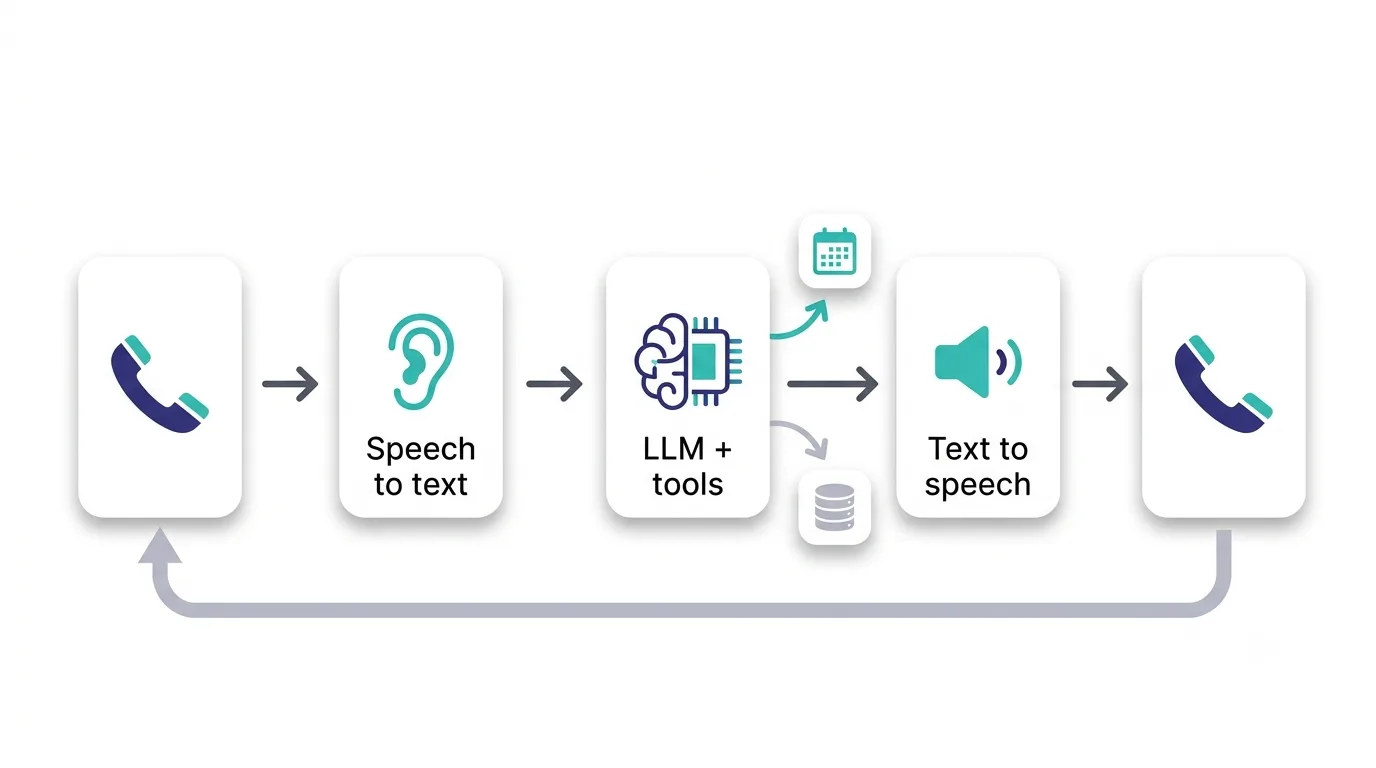
ElevenAgents chains three layers: speech-to-text to hear the caller, an LLM to decide what to say and call tools (book a slot, look up an order), and text-to-speech to reply. You configure the agent with a system prompt, a first message, a voice, a language, and a knowledge base built from your files or URLs, then test it and connect it to a phone line. Every plan includes call minutes, from 15 on Free to 12,375 on Business. Extra minutes cost $0.08, or $0.16 when you burst past your concurrency limit, per the ElevenAgents pricing page. LLM usage bills separately. ElevenLabs adds no telephony fee, but your phone provider (Twilio or a SIP trunk, for example) bills you for the carrier side.
With Speechify, you'd use its TTS API as one piece and build the rest yourself: speech recognition, turn-taking, interruption handling, tool calls, and phone integration. Teams do build that way, but it's a project measured in engineering months, not an afternoon in a dashboard.
Agents work best on narrow, repetitive jobs like appointment booking, lead qualification, and order-status questions. If that's your use case, start with what an AI voice agent is, then read how to reduce ElevenLabs agent latency before you go live. Our ElevenAgents implementation guide covers the full build.
How to test both in 30 minutes
Both tools have free tiers, so you can run your own ElevenLabs vs Speechify test instead of taking anyone's word for it, ours included. Run the same five tests on each and listen on the device your audience will use.
- Read a tricky paragraph. Write 100 words that include a person's name, a brand name, a phone number, a date, a price, and an abbreviation such as "ASAP" or "Q3." Note every mispronunciation.
- Play long-form audio. Generate about 2,000 words of real content, such as a chapter or a report section. Listen to minutes 1 and 10 back to back and check whether the tone drifts.
- Try mixed language. Include one sentence that switches languages mid-way, the way your users talk. Hinglish is a good stress test if you serve India.
- Clone a voice. Record the same 2-minute sample for each tool's cloning flow. Ask someone who knows the speaker which clone sounds more like them.
- Measure latency. If you're building an app, time how long it takes from sending the request until the first audio plays in your app, not the vendor's quoted number. Run it 10 times and take the median.
Then price your expected volume on both, using the worked example above as a template. The result usually decides itself within the half hour.
Pros and cons
ElevenLabs
Pros:
- Top two spots on the Artificial Analysis blind listening board (October 2026), with fine control over delivery.
- Instant and professional voice cloning, plus dubbing in 92 languages.
- Low-latency streaming (Flash, v4 Turbo) and a ready-made voice agents platform.
- 90+ languages on its flagship v4 models.
Cons:
- Credit-based billing makes monthly cost hard to predict when usage spikes.
- More settings to learn before results sound right.
- ElevenReader is a solid reader but less mature than Speechify's apps.
Speechify
Pros:
- A polished reading app across phone, desktop, and browser.
- Much cheaper API pricing, from $6 to $15 per million characters depending on plan and model.
- Fast streaming (Speechify reports 72ms to first audio on Simba 3.5) and a generous 500,000-character free API tier.
Cons:
- Three products with three bills, which is easy to misread when you buy.
- Ranked below ElevenLabs on the independent blind listening board.
- Fewer dubbing languages and no agent platform.
Who should choose which
Students, heavy readers, and people with dyslexia or low vision should choose Speechify Reader. It's the better daily listening app, and you won't use most of what ElevenLabs offers. Try ElevenReader too if voice expressiveness matters to you.
YouTubers, podcasters, course creators, and audiobook authors should choose ElevenLabs. The voices, the cloning, and the dubbing are why you're paying.
Developers should choose based on the timing of the speech. Batch narration at scale points to Speechify's API; anything a user talks to in real time points to ElevenLabs.
Support, sales, and operations teams should choose ElevenLabs, because Agents is the only option here that handles live calls without a custom build. Indian businesses get two extra reasons in ElevenLabs' Indian-language models and its integrations with telephony providers Exotel, Ozonetel, and Plivo.
The verdict
In the ElevenLabs vs Speechify matchup, Speechify wins listening and ElevenLabs wins making. For cheap batch narration through an API, Speechify is the better value. For expressive voiceovers, cloning, dubbing, real-time apps, and voice agents, ElevenLabs is the better platform, and it's the one we'd build a business product on.
The sticker price is rarely the full cost for businesses. Overage during traffic spikes, telephony and compliance setup, prompt and guardrail design, and monitoring all sit outside the subscription. That's the work an ElevenLabs implementation partner handles.
Comparing more options? See ElevenLabs vs Cartesia, ElevenLabs vs Fish Audio, and ElevenLabs vs Google Text-to-Speech.
FAQ
Is ElevenLabs better than Speechify?
ElevenLabs is better for creating audio, and Speechify is better for listening to text. ElevenLabs leads on expressive voices, voice cloning, dubbing, low-latency APIs, and voice agents. Speechify leads with its polished reading app and a cheaper flat-rate API for batch narration. Decide based on whether you're producing audio for an audience or consuming documents yourself.
Which is cheaper, ElevenLabs or Speechify?
Speechify is cheaper at the API level, at $10 a month for 1.9 million characters of its Simba 3.0/3.2 models. ElevenLabs' API costs $0.04 to $0.08 per 1,000 characters depending on the model, and its app plans run from $6 to $990 a month. For a 10-hour audiobook, that's roughly $10 on Speechify versus $22 to $43 on ElevenLabs.
Which is better for voice cloning?
ElevenLabs is better for voice cloning when fidelity matters. It offers instant cloning from a short sample and professional cloning trained on longer recordings, which suits audiobooks and branded narration. Speechify offers cloning on paid API plans with a recorded consent check, which works well for simpler in-app use. Both require that you have the rights to the voice.
Does ElevenLabs have an app like Speechify?
Yes. ElevenLabs makes ElevenReader, a reading app that reads PDFs, EPUBs, articles, and pasted text aloud in 90+ languages. It's the closest match to Speechify Reader and costs less, at $11 a month versus $29. The main difference is that ElevenReader doesn't export audio files, so for downloadable audio you'd use the main ElevenLabs platform instead.
Can I use ElevenLabs or Speechify audio commercially?
Yes, on the right plan. Every paid ElevenLabs plan from the $6 Starter includes a commercial license, but the Free plan doesn't. Speechify's rights depend on the product: Reader is for personal listening, paid Studio plans include commercial rights, and the SpeechifyAI API allows commercial use even on its free tier. Check the license for your exact plan before publishing.
Next step
If your ElevenLabs vs Speechify comparison has landed on ElevenLabs for voiceovers, an API integration, or a voice agent that takes real calls, the hard part is getting it into production with predictable costs. Haass designs, builds, and runs ElevenLabs deployments end to end, from prompt design and telephony to QA and monitoring. See how our ElevenLabs voice AI implementation works and book a scoping call.